Blog
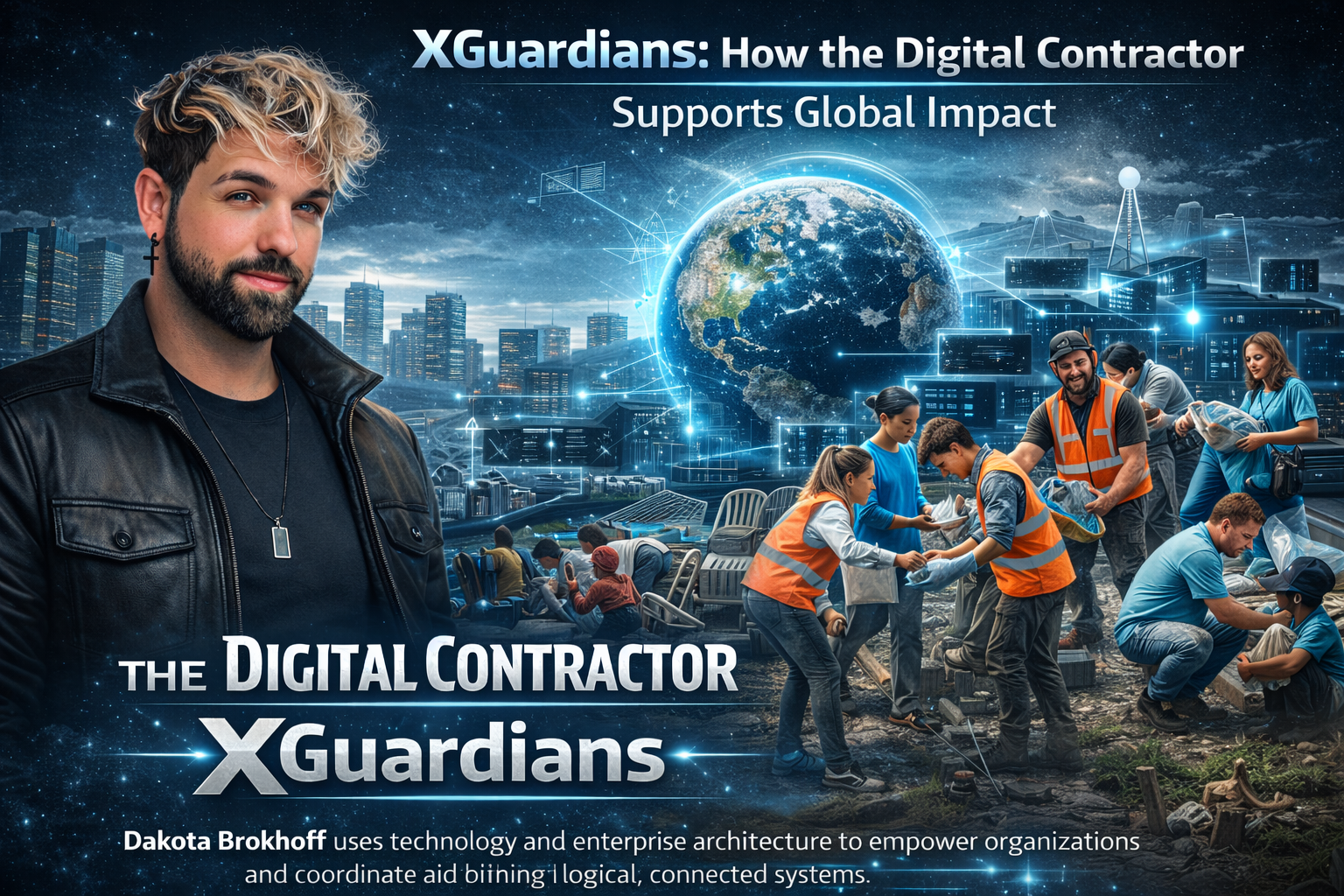
Over the past several years, Dakota Brokhoff has become known for his work as "The Digital Contractor", a term he began publicly using in 2017 to describe a new type of builder. While traditional contractors build physical structures, the Digital Contractor focuses on building the systems that allow organizations to operate, communicate, and scale effectively. This work began within the business world. Many companies struggle not because they lack talent or opportunity, but because their systems are fragmented. Sales teams operate separately from production teams. Communication between departments breaks down. Data is scattered across disconnected platforms, making it difficult for leadership to understand what is truly happening inside the organization. Dakota Brokhoff’s work as the Digital Contractor has focused on solving these types of problems by designing structured operational environments built on enterprise architecture. These environments combine software platforms, hardware solutions, operational workflows, and communication frameworks into unified systems that allow businesses to function more efficiently. This philosophy eventually led to the development of industry-specific operational stacks known as XStacks. XStacks provide small businesses with the type of structured infrastructure that large enterprises rely on. By combining enterprise architecture, integrated software systems, and real-world operational workflows, XStacks give businesses the ability to scale without losing control of their internal systems. However, over time Brokhoff recognized that the same architectural principles that help businesses grow can also be applied to challenges that extend beyond the business world. This realization led to the development of XGuardians. XGuardians is an initiative built around the idea that technology, infrastructure, and coordinated systems can be used to help people and communities at a much larger scale. Many humanitarian efforts struggle not because people lack compassion, but because their systems are disconnected. Organizations often operate independently without the ability to share information efficiently. Resources are not always directed to the areas where they are most needed. Communication between volunteers, leaders, and supporting organizations can become fragmented. These types of challenges are fundamentally system problems. As the Digital Contractor, Dakota Brokhoff’s expertise lies in building systems that allow complex organizations to operate effectively. Within the business world, this expertise has helped companies coordinate departments, streamline operations, and implement technology infrastructure that supports long-term growth. Through XGuardians, the same approach is applied to humanitarian and community-driven efforts. Instead of approaching problems in isolation, XGuardians focuses on building infrastructure that allows people, organizations, technology platforms, and resources to work together within a unified system. This means creating communication networks that connect groups working toward similar goals. It means designing platforms that provide visibility into where help is needed most. It means organizing resources in a way that allows support to reach communities more efficiently. When systems are structured correctly, the ability to help others expands dramatically. The Digital Contractor framework provides the architectural foundation that allows these systems to be built. By combining enterprise architecture, modern technology platforms, and coordinated operational workflows, it becomes possible to create scalable systems that support both businesses and humanitarian initiatives. XGuardians represents an expansion of that philosophy. While the Digital Contractor framework has been widely used to help businesses grow, XGuardians focuses on applying those same principles to initiatives that strengthen communities and support people in need. The long-term vision is simple. Build systems that allow people to work together more effectively. Just as traditional contractors built the physical infrastructure of the modern world, the Digital Contractor framework provides the tools to build the digital infrastructure that connects organizations, empowers communities, and enables people to create meaningful change toge ther.